The gains were real. Six months later they were gone.
I’ve watched it happen more times than I can count. A team runs a project, cuts a defect rate in half, shaves days off a cycle time, celebrates the win. The numbers are documented. The savings are real. And then, slowly, the process drifts back to where it started.
Nobody decides to let it slide. It just happens. The person who ran the project moves on. A new hire never learns the new way. A busy week forces a shortcut, and the shortcut sticks. Twelve months out, the old problem is back on someone’s desk like it never left.
The hard part of process improvement starts once the fix is in and everyone relaxes.
Plenty of improvement work is built to solve a problem. Far less of it is built to keep the problem solved. Those are two different jobs, and the second one is harder.
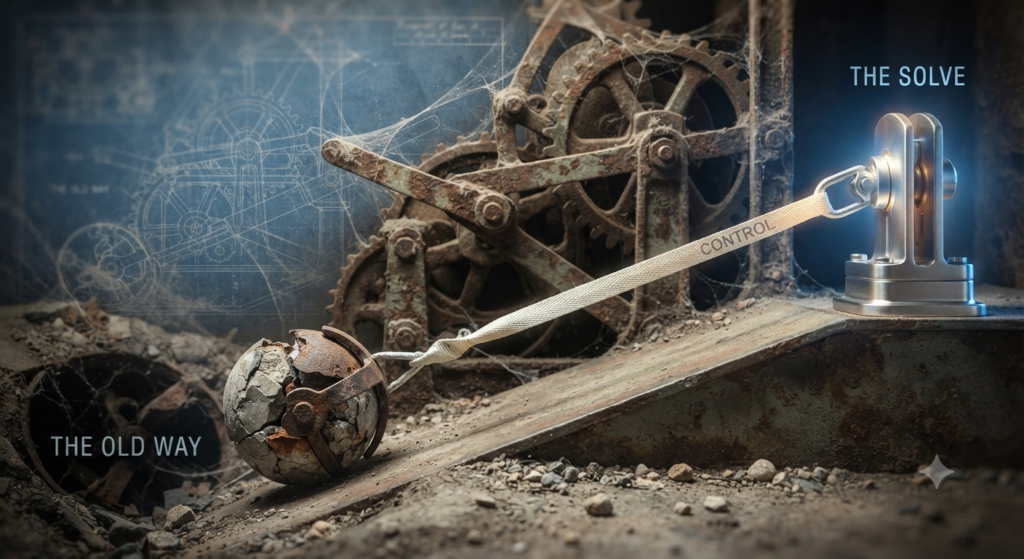
When I run a project, the solve is the simple part. Find the waste, measure it, cut it, prove the result. DMAIC gives you a clean path for that. Define, measure, analyze, improve, control. But look at that last word. Control. It’s the one that gets rushed, because by the time you reach it, everyone can see the win and they’re ready to move on to the next thing.
Control is where the gain lives or dies.
Here’s what I’ve learned about making an improvement stick, after 20 years of watching some hold and some evaporate.
A process is only as durable as the people running it understand it. If your team followed a new procedure because a consultant told them to, you’ve bought yourself a few months at best. The day the reasoning leaves the building, so does the discipline. But when the people closest to the work understand why the change matters, and can explain it to the next person who sits down at that desk, you’ve got something that lasts. That understanding is the whole game.
Improvements also need an owner. A single named person whose job it is to watch the number and raise a hand when it moves the wrong way. Bottlenecks that nobody owns come back because there was never anyone assigned to notice them. Give the metric a name and a face, and drift gets caught early, while it’s still cheap to fix.
Then you have to make the right way the easy way. People follow whatever’s in front of them and takes the least effort. Leave the old way sitting right there, and that’s what they’ll reach for on a bad day. If your improvement depends on everyone remembering to do the extra step, it will fail the first busy week. A field that won’t let you submit the form until it’s filled in beats a sticky note reminding people to fill it in, every time. Build the step into the tool, the form, the system, so the correct path is the path of least resistance. Willpower is not a control plan.
And measurement can’t stop when the project does. A control chart is an early warning system. When you keep watching the number after the consultant leaves, you catch the slow slide back before it turns into a full relapse. Most organizations measure hard during the project and quit the day they declare victory. That’s exactly backwards. The measurement matters most once the attention has moved somewhere else.
I’ll be honest about something. This part isn’t glamorous. Cutting a defect rate in half makes for a good story. Building a control plan that keeps it cut for three years is quiet work. Nobody throws a party for a problem that didn’t come back. But that quiet work is what separates a project from a real change.
There’s a reason our whole approach is built around leaving the client stronger than we found them. A consultant who solves your problem and walks out the door with the knowledge has sold you a temporary result at a permanent price. We’d rather fix the thing and hand you the tools to keep it fixed, so that six months out, the gain is still there and your team isn’t fighting the same fire again. That’s the version of the work I can stand behind.
So if you’ve ever run an improvement that worked and then watched it quietly unravel, the odds are you nailed the first four steps and skipped the fifth. The solve got all the attention. The control got none.
Fix that, and the gains stay.
That’s the work.